
In a significant move to accelerate the decarbonization of European logistics and infrastructure, the European Investment Bank (EIB) has announced it is currently evaluating a EUR 200 million funding package to be channeled through Erste Group Bank AG. This strategic financial mechanism is designed to catalyze broader investments in the European Union’s rail sector, with total project values estimated at a staggering EUR 1.6 billion.
Rather than acting as a traditional project-specific loan, this intervention functions as a sophisticated guarantee mechanism. By de-risking supply contracts for rolling stock and essential rail infrastructure components, the EIB and Erste Group are creating a financial umbrella that allows manufacturers and operators to modernize their fleets and networks with greater confidence and liquidity.
The Mechanism: Bridging the Capital Gap in Rail Infrastructure
At the core of this operation is a shift in how development banks approach infrastructure funding. By providing guarantees to Erste Group, the EIB is effectively lowering the cost of capital for private-sector manufacturers and rail operators. This structure is intended to cover the inherent risks associated with long-term supply contracts, such as volatility in material costs, manufacturing delays, and the transition toward green energy technologies.
De-risking the Value Chain
The scope of this funding is comprehensive. It encompasses not only the procurement of high-speed passenger trains and heavy-haul freight locomotives but also the vital "veins" of the rail system: signaling equipment, power supply components, and track-side maintenance technology. By supporting the European manufacturing value chain, the EIB and Erste Group aim to foster industrial resilience, ensuring that European rail operators can source high-quality, sustainable technology from within the continent.
Chronology: Building a Track Record of Success
The proposed EUR 200 million package is not an isolated initiative; it represents the culmination of a decade of deepening cooperation between Erste Group and the rail industry across Central and Eastern Europe (CEE).
- 2020–2023: The Foundation of Rolling Stock Finance. Erste Group begins scaling its specialized transport finance division, focusing on the transition from diesel-reliant freight to electric mobility.
- July 2025: The Softronic Milestone. A landmark agreement is signed involving RS Lease Slovakia and the Romanian manufacturer Softronic. The delivery of Transmontana locomotives marks a shift in regional freight capabilities, providing cross-border interoperability between Romania, Hungary, and Slovakia.
- Late 2025 – Early 2026: Erste Group expands its portfolio with the Vegatrans "roadrailLink" project, proving that financial innovation can successfully integrate road logistics with rail networks.
- September 2026 (Current Status): The EIB initiates the assessment of the EUR 200 million guarantee facility, signaling a move toward institutionalizing the support for large-scale rail infrastructure investments.
Supporting Data: Modernizing the European Freight Network
The effectiveness of this partnership is best exemplified by the tangible projects already underway. The modernization of the freight corridor is a primary target, as the EU pushes to shift road freight to rail to meet its "Fit for 55" climate targets.
Case Study: The Budamar-Softronic Partnership
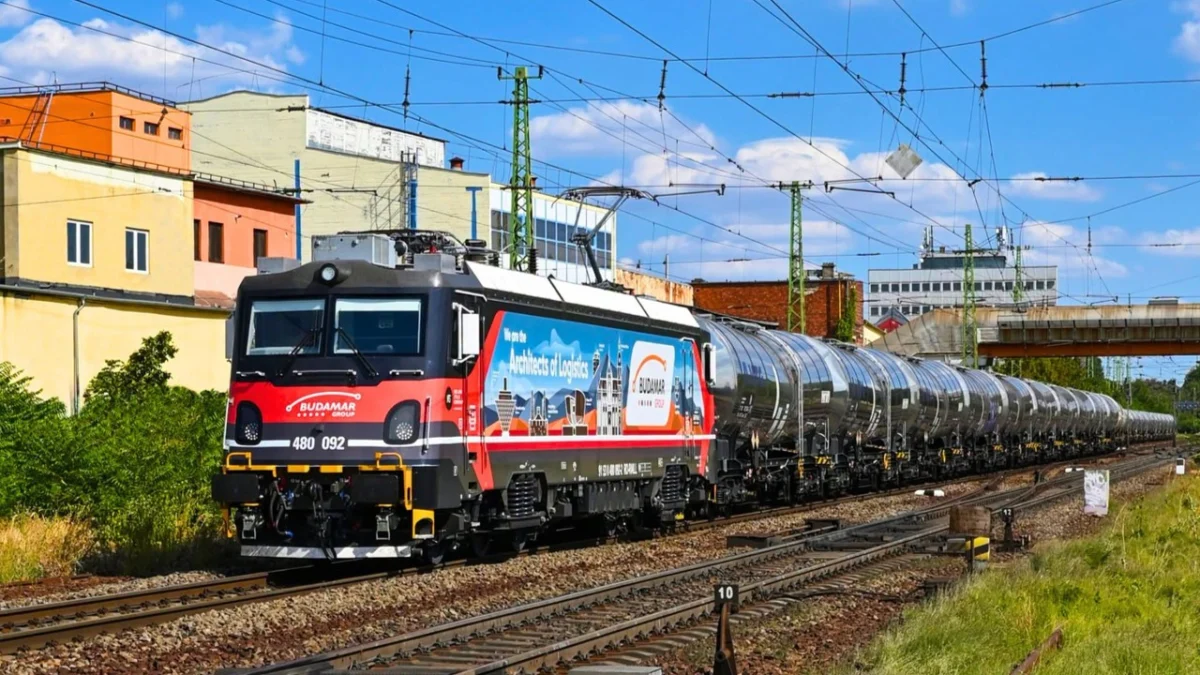
The collaboration with Budamar remains the gold standard for this financial model. By utilizing Slovenská sporiteľňa (a subsidiary of Erste Group), Budamar secured the financing necessary to acquire 50 electric locomotives. The significance of this project cannot be overstated:
- Decarbonization: The replacement of older, high-emission diesel locomotives with high-efficiency electric units (like the Softronic Transmontana) drastically reduces the carbon footprint per ton-kilometer.
- Interoperability: The Transmontana units, certified for operation across multiple national borders, reduce the "wait-time" at rail junctions, increasing the overall velocity of goods across the CEE region.
The Vegatrans roadrailLink Innovation
Another key pillar of this financial strategy is supporting intermodal technology. The Vegatrans project is a testament to how financial support can bridge the gap between traditional trucking and modern rail. By funding technology that allows non-craneable semi-trailers to be loaded onto trains, Erste Group has helped remove up to 1,000 lorries per week from European highways, alleviating traffic congestion and reducing greenhouse gas emissions.
Official Perspectives: Aligning EU Policy with Private Capital
While official statements remain measured during the assessment phase, the sentiment from both the EIB and Erste Group is clear: the transition to a climate-neutral economy is impossible without massive private sector mobilization.

The Role of the EIB
The European Investment Bank’s involvement underscores the EU’s commitment to the European Green Deal. By utilizing guarantee structures rather than direct subsidies, the EIB is proving that development banks can act as "market makers," encouraging commercial lenders to enter sectors that might otherwise be perceived as high-risk due to long payback periods.
Erste Group’s Strategic Positioning
Erste Group, as the lead commercial partner, has carved out a niche as the "bank of choice" for rail infrastructure in Central Europe. Their approach is rooted in a deep understanding of the regulatory landscape governing the Single European Railway Area. By acting as the intermediary, Erste Group provides the technical expertise to evaluate manufacturers, manage fleet risks, and ensure that the financing aligns with the operational lifespan of the rolling stock—often spanning 20 to 30 years.
Implications: The Future of Rail Finance
The implications of the EIB’s proposed EUR 200 million guarantee extend far beyond the balance sheets of the companies involved. If successful, this model could serve as a blueprint for other regions struggling to modernize aging transport infrastructure.
1. Scaling the Supply Chain
The injection of liquidity into supply contracts means that European manufacturers—often smaller or more specialized than global giants—can ramp up production. This strengthens the European rail manufacturing sector, ensuring that the technology needed for the green transition is built within the EU.
2. Enhancing Energy Efficiency
The focus on electric locomotives and intermodal transport directly contributes to the EU’s energy independence goals. By reducing reliance on diesel, operators insulate themselves from the volatility of global fossil fuel markets, creating a more stable and predictable cost structure for the entire logistics sector.
3. A Multiplier Effect on Investment
The EUR 1.6 billion total investment figure is the most striking implication of this deal. A EUR 200 million guarantee from the EIB is unlocking roughly eight times its value in private capital. This leverage ratio demonstrates the power of public-private partnerships in infrastructure. It suggests that the future of major public works is not necessarily in direct state funding, but in the intelligent application of risk-mitigation tools that make projects attractive to private equity and institutional lenders.
4. Improving Cross-Border Logistics
As seen in the Budamar and Transmontana examples, the financial structure encourages the adoption of interoperable technology. This is vital for the integration of the European market. By financing rolling stock that can traverse multiple national networks, the EIB and Erste Group are effectively "melting away" the bureaucratic and technical borders that have historically hindered European rail freight.
Conclusion: A New Era for European Connectivity
The potential EIB funding package represents a pivotal moment for the rail industry. By aligning the institutional weight of the European Investment Bank with the agile, market-driven expertise of the Erste Group, the EU is creating a robust financial framework capable of sustaining the massive infrastructure needs of the coming decade.
As the assessment phase concludes, the market remains optimistic. The success of this initiative will likely serve as a benchmark for future transport projects, proving that when financial innovation meets clear policy objectives, the transition to a sustainable, efficient, and interconnected European transport network is not just a policy goal—it is a commercially viable reality. Through this commitment, the EIB and Erste Group are not just financing trains; they are underwriting the future of European trade and environmental stewardship.

