

WASHINGTON — In a definitive blow to the future of ultra-high-speed rail in the United States, the U.S. Department of Transportation (DOT) has officially canceled more than $26 million in federal grants earmarked for the long-delayed Baltimore–Washington Superconducting Magnetic Levitation (SCMAGLEV) Project. The sweeping decision effectively terminates federal backing for a multi-billion-dollar initiative that aimed to connect two of the nation’s most densely populated urban centers in a matter of minutes.
The announcement, detailed in a formal statement released on August 2, follows nearly a decade of administrative friction, fierce community resistance, skyrocketing cost projections, and severe national security hurdles. While proponents long championed the project as a revolutionary leap forward in American infrastructure, federal regulators ultimately concluded that the initiative had become an untenable drain on public resources with virtually nothing tangible to show for its years of existence.
Main Facts
The termination of the SCMAGLEV grants marks one of the most high-profile cancellations of a proposed high-speed transit project in recent American history.
- The Funding Cuts: Transportation Secretary Sean P. Duffy confirmed that the Federal Railroad Administration (FRA) is formally rescinding two federal grants totaling just over $26 million.
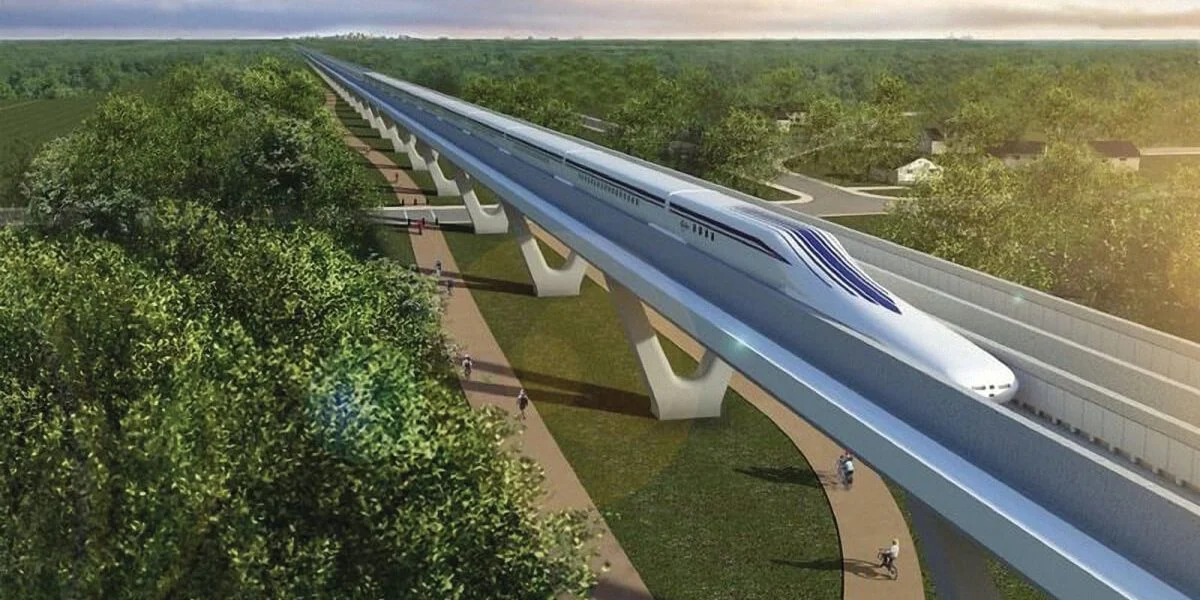
- The Technology: Spearheaded by developer Baltimore-Washington Rapid Rail (BWRR)—with backing from Japanese interests, including the Central Japan Railway Company—the system was designed to utilize advanced superconducting magnetic levitation technology. Trains were projected to achieve speeds exceeding 300 miles per hour, theoretically shrinking travel times between Baltimore and Washington, D.C., to a mere 15 minutes.
- The Cost Explosion: What began as an ambitious, privately and publicly backed endeavor saw its estimated capital cost balloon to nearly $20 billion.
- The Regulatory Halt: Alongside the financial clawback, the FRA officially rescinded its Notice of Intent (NOI), effectively killing the ongoing environmental review process that had been stalled since August 2021.
Chronology of a Stalled Dream
To understand how the SCMAGLEV project unraveled, one must look back at its nearly ten-year trajectory, which was plagued by compounding delays and a failure to break ground.
2016–2018: Early Optimism and Initial Planning
The project formally entered the public sphere around 2016. Backed by BWRR and propelled by the proven success of Japan’s Shinkansen maglev technology—which holds world speed records—the initiative captured the imagination of transit advocates. Early feasibility studies were launched, and initial federal funding streams were secured to begin the arduous environmental and engineering review processes. Supporters argued the line would alleviate chronic congestion along the heavily traveled Interstate 95 corridor.
2019–2021: Rising Tensions and Pandemic Stalls
As route alternatives were mapped, friction intensified. The proposed alignments threatened numerous suburban neighborhoods, parklands, and commercial districts between Baltimore and the nation’s capital. Local opposition coalesced rapidly. Furthermore, the COVID-19 pandemic introduced widespread administrative slowdowns. By August 2021, the critical environmental review process ground to a complete halt, where it remained dormant for years amid unresolved engineering and routing disputes.
2022–2024: Mounting Scrutiny
During this period, independent audits and federal inquiries highlighted structural cost overruns and deep inter-agency friction. The projected price tag climbed toward the $20 billion mark, raising alarms among fiscal conservatives and state lawmakers. Community groups continued filing legal challenges, arguing that the localized disruptions vastly outweighed the regional benefits.
August 2025: The Federal Guillotine Falls
The final chapter arrived on August 2, 2025, when Transportation Secretary Duffy and the FRA officially pulled the plug. Citing a decade of poor planning and unresolvable federal conflicts, the DOT enacted the grant cancellations and terminated the environmental impact statement process, effectively shuttering the project’s operational future.
Supporting Data and National Security Obstacles
While spiraling budgets and delayed timelines played a major role in the DOT’s decision, the fatal blow to the SCMAGLEV project came from an unprecedented wall of opposition raised by federal agencies and national security institutions.
According to analyses by the FRA and reporting by CBS News Baltimore, the proposed maglev route posed "significant, unresolvable impacts" on federal property, sensitive infrastructure, and vital national security missions. Because the high-speed rail line required a strictly straight and level alignment—often necessitating deep underground tunnels or elevated guideways—its path intersected with some of the most sensitive government land in the country.
A coalition of federal entities raised formal, vehement objections:
- The National Security Agency (NSA) and Fort George G. Meade: Expressed grave concerns over electromagnetic interference, vibrations, and physical security risks posed by high-speed transit infrastructure running in proximity to intelligence operations.
- The National Aeronautics and Space Administration (NASA): Highlighted potential disruptions to sensitive research facilities and institutional operations.
- The U.S. Secret Service and Department of Defense: Flagged complex logistical and protective security vulnerabilities associated with the alignment.
- The Department of the Interior, U.S. Fish and Wildlife Service, and National Park Service: Warned of irreversible environmental degradation, habitat fragmentation, and damage to protected public lands and wildlife corridors.
These collective objections demonstrated that the project was fundamentally incompatible with the federal footprint in Maryland, rendering the environmental review process indefensible.
Official Responses
The termination of federal support triggered sharp reactions from federal leadership, though the project’s primary private backers remained largely silent in the immediate aftermath.
Transportation Secretary Sean P. Duffy did not mince words when explaining the rationale behind the decision, framing it as a matter of fiscal responsibility and common-sense governance.
"After nearly a decade of poor planning, significant community opposition, tremendous cost overruns, and nothing to show for it, this project no longer merited public funding," Secretary Duffy stated.
He elaborated on the administration’s vision for national infrastructure, emphasizing that ambition must be matched by execution:
"We want big, beautiful projects worthy of taxpayer dollars — including high-speed rail. This project lacked everything needed to be a success from planning to execution. This project did not have the means to go the distance, and I can’t in good conscience keep taxpayers on the hook for it."
Conversely, Baltimore-Washington Rapid Rail (BWRR) had not issued a formal, comprehensive counter-statement as of publication time. Throughout the project’s lifespan, BWRR had consistently argued that the SCMAGLEV line would serve as an economic catalyst, generating thousands of construction jobs, dramatically reducing carbon emissions along the corridor, and cementing the United States as a leader in advanced, high-speed rail technology. Without federal backing or active environmental permits, however, the company’s ability to secure alternative capital appears virtually non-existent.
Broader Implications for U.S. High-Speed Rail and Maglev Technology
The demise of the Baltimore–Washington SCMAGLEV project casts a long, somber shadow over the future of magnetic levitation technology in the United States, while offering broader lessons for the nation’s infrastructure development strategy.
Is Maglev Dead in the U.S.?
Despite canceling the specific grants and rescinding the Notice of Intent, the FRA was careful to note that the decision does not constitute a blanket ban on the technology itself.
"Rescission of the NOI does not prevent the future deployment of MAGLEV technology in the U.S.," the agency noted in its official filings.
Transportation analysts, however, are deeply skeptical. The failure of a heavily backed, well-publicized project operating in one of the densest and wealthiest transit corridors in the country will likely make private investors, foreign technology providers, and federal policymakers exceedingly hesitant to fund future maglev ventures. High-speed rail in America has historically struggled against a trifecta of hurdles: fragmented land-use laws, staggering capital costs, and intense political friction at local and state levels. The SCMAGLEV project fell victim to all three.
A Pivot Toward Viability
Secretary Duffy indicated that the DOT remains open to funding the future of transportation and encouraging genuine innovation, provided that such proposals meet strict standards of economic viability and public value.
"We will continue to seek exciting opportunities to fund the future of transportation," Duffy noted, while underscoring that accountability and realistic execution must be non-negotiable prerequisites for federal grants.
The Immediate Outlook
For the residents of Maryland and Washington, D.C., the immediate impact is a sense of closure to a decade-long saga of uncertainty. Property owners who faced the threat of eminent domain can finally breathe a sigh of relief, and local municipalities can refocus their planning efforts on conventional transit upgrades, highway improvements, and regional rail modernization.
Ultimately, the Baltimore–Washington SCMAGLEV stands as a cautionary tale in modern American infrastructure development—a reminder that technological brilliance on paper cannot overcome structural planning failures, exploding budgets, and the formidable wall of community and national security opposition.

