

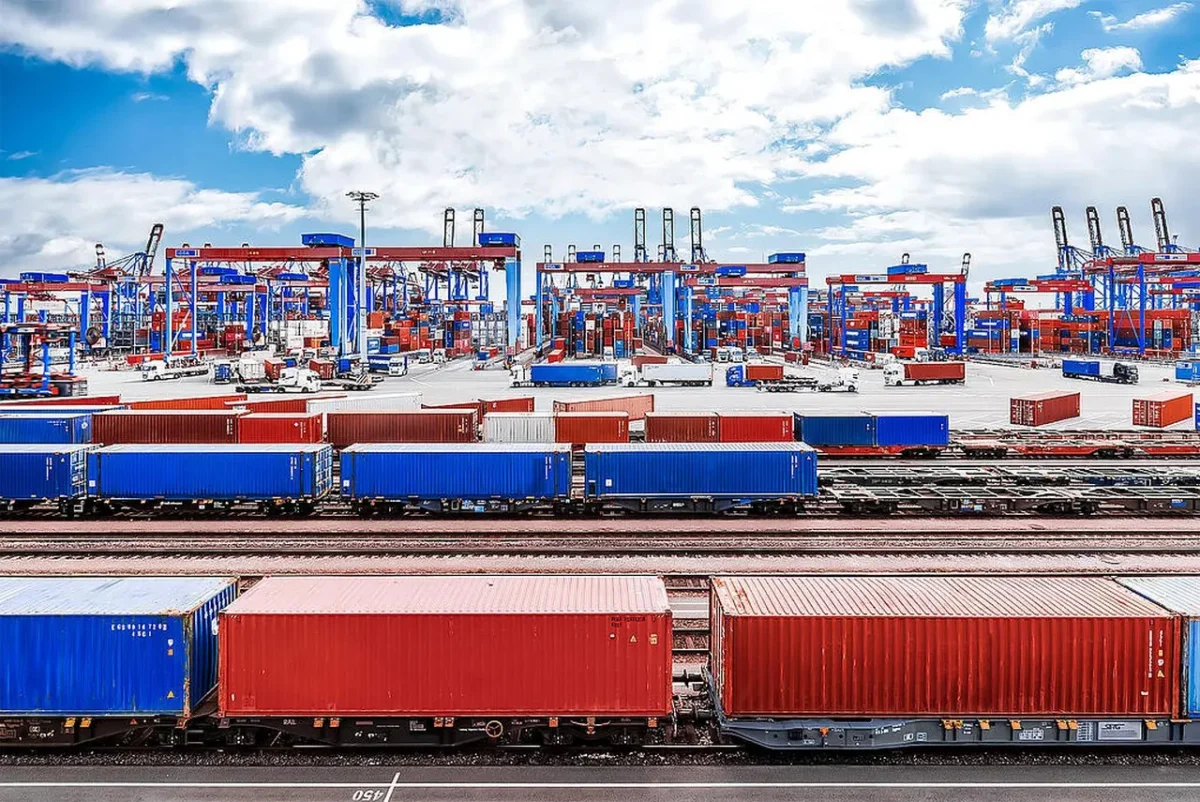
GDAŃSK, POLAND — In a landmark development for European maritime and rail logistics, the Port of Gdańsk Authority and terminal operator Baltic Hub have officially signed a 30-year lease agreement for a sprawling 27-hectare site. Finalized following a highly competitive tender procedure, the agreement paves the way for the construction of a state-of-the-art intermodal rail and container handling facility.
The ambitious infrastructure project is designed to fundamentally reshape cargo flows across Central and Eastern Europe (CEE). Anchored by the capability to handle standard 750-meter freight trains—the European Union standard for efficient trans-European transport corridors—the new facility will significantly boost both the landside and quayside handling capacities of the existing deepwater terminal.
Strategically positioned directly adjacent to Baltic Hub’s flagship T2 deepwater terminal, the newly acquired land is already designated for port activities and boasts pre-existing rail connections. These advantages make it the most logistically sound and cost-effective location for the construction of a second dedicated rail facility serving the complex. While Baltic Hub has elected not to disclose the total financial investment or a rigid completion timetable, the project will be rolled out in carefully calibrated phases to ensure uninterrupted terminal operations.
Chronology of the Agreement and Strategic Evolution
The realization of the 27-hectare expansion project is the result of years of strategic planning, tender preparation, and evolving logistics demands within the Baltic Sea basin.
- Early 2020s: As global shipping networks faced unprecedented disruptions, cargo owners and maritime operators increasingly looked toward northern European gateways as alternatives to congested Western European ranges. Baltic Hub experienced steady volume growth, highlighting future capacity bottlenecks, particularly on the landside and rail corridors.
- Mid-2025: Recognizing the need for expanded intermodal infrastructure, the Port of Gdańsk Authority initiated a competitive tender process for the 27-hectare plot situated immediately next to the T2 deepwater terminal. The land was earmarked specifically for port-related logistics and rail infrastructure development.
- August 4, 2026: Following a rigorous evaluation of the tender bids, the Port of Gdańsk Authority and Baltic Hub officially signed the 30-year lease agreement. This formalizes the long-term partnership and grants Baltic Hub the legal and operational framework required to break ground on the phased construction of the new rail siding, container yards, and heavy-duty handling equipment.
- Post-2026 (Future Outlook): Over the coming years, Baltic Hub will execute the phased development of the site. The timeline will focus initially on clearing and integrating the land with existing T2 operations, laying down the heavy-duty rail tracks capable of supporting 750-meter trains, and erecting modern container storage yards equipped with eco-efficient handling gear.
Supporting Data, Infrastructure Specs, and Ownership Structure
The scale of the Baltic Hub expansion underscores the changing dynamics of European logistics, where the concentration of mega-container ships requires equally massive hinterland clearance capabilities.
Key Infrastructure Specifications
- Lease Duration: 30 years, providing long-term operational security for multi-decade investments.
- Site Area: 27 hectares of prime industrial land located directly adjacent to the T2 deepwater terminal.
- Train Handling Capacity: Infrastructure designed to accommodate full-length 750-meter freight trains, maximizing the payload efficiency of rail operators and reducing per-unit transport costs.
- Operational Scope: Construction of a second dedicated rail facility, expansion of container storage yards, and procurement of advanced, heavy-duty handling equipment.
Ownership and Strategic Alignment
Baltic Hub is backed by a powerful consortium of global and regional stakeholders, combining deep port management expertise with robust financial backing:
- PSA International: A leading global port group headquartered in Singapore, providing world-class terminal operations and technological frameworks.
- Polish Development Fund (PFR): Ensuring alignment with national economic strategies and regional infrastructure development goals.
- IFM Global Infrastructure Fund: Providing institutional capital for large-scale, long-term infrastructure assets.
Furthermore, the project directly aligns with PSA Group’s "Node to Network" strategy. This corporate framework focuses on transforming maritime terminals from isolated points of discharge into deeply integrated nodes within expansive, multimodal logistics networks. By bridging deepwater maritime arrivals with high-capacity rail corridors, Baltic Hub is executing a blueprint designed to future-proof its operations against capacity constraints.
Official Responses and Stakeholder Perspectives
The significance of the 30-year lease agreement has drawn high-profile commentary from both port leadership and corporate executives, emphasizing the project’s broad economic and geopolitical importance.
Dorota Pyć, President of the Port of Gdańsk Authority, highlighted the long-term vision behind the tender and the port’s rising stature in European trade:
"The signing of the lease agreement with Baltic Hub Container Terminal confirms the consistent implementation of the Port of Gdańsk’s development strategy. Thanks to direct services to and from Asia, the port can continue to strengthen its position among Europe’s leading ports."
Pyć further emphasized the geopolitical dimension of the project, noting that robust port infrastructure acts as a stabilizing force in turbulent times:

"This investment will help increase the resilience of cargo flows amid geopolitical challenges and changes in global maritime transport."
Echoing these sentiments, Jan Van Mossevelde, Chief Executive Officer of Baltic Hub, framed the agreement as a defining moment for the company’s operational capabilities:
"This lease agreement represents a pivotal milestone in Baltic Hub’s long-term strategy. The expansion of our rail terminal and yard capacity will strengthen hinterland connectivity by enabling a greater share of containers to be transported by rail. This will enhance network efficiency, reduce reliance on road transport and support the modal shift needed to lower supply chain emissions."
Implications for Central and Eastern European Logistics
The development of the 27-hectare intermodal area carries profound implications for the wider logistics landscape of Central and Eastern Europe (CEE), reshaping trade routes, environmental standards, and regional economic competitiveness.
1. Driving the Modal Shift from Road to Rail
One of the primary objectives of the Baltic Hub expansion is to drastically increase the proportion of containers moved via rail rather than heavy commercial trucks. Road transport across Europe faces growing headwinds, including severe driver shortages, rising fuel costs, and stringent carbon emission regulations.
By constructing rail sidings capable of handling 750-meter trains, Baltic Hub can dispatch massive volumes of cargo inland in a single movement. This modal shift not only eases highway congestion around major urban and port zones but also directly addresses corporate and regulatory demands for lower-emission supply chains. Shippers and cargo owners utilizing the Port of Gdańsk will benefit from a significantly reduced carbon footprint, aligning with the European Union’s broader Green Deal objectives.
2. Strengthening Regional Competitiveness for CEE Markets
Gdańsk has long served as a primary gateway not just for Poland, but for landlocked Central and Eastern European nations. The new rail facility is specifically targeted at enhancing the port’s competitive edge in servicing key markets such as the Czech Republic, Slovakia, and Ukraine.
As global supply chains adapt to post-pandemic realities and regional conflicts—such as the ongoing war in Ukraine, which has reconfigured traditional Black Sea trade routes—reliable, high-capacity transport corridors to the north have become vital. The ability to seamlessly transfer large volumes of maritime container traffic onto efficient rail corridors positions Gdańsk as a formidable competitor to traditional North Sea mega-ports like Rotterdam and Antwerp for CEE-bound cargo.
3. Accommodating Mega-Ships and Changing Shipping Networks
Modern global shipping is characterized by the continuous deployment of ultra-large container vessels (ULCVs). When these colossal ships dock, they discharge thousands of containers in a matter of days, creating immediate pressure on terminal storage and evacuation routes.
Without commensurate landside capacity, quayside efficiency drops, causing costly vessel delays and supply chain bottlenecks. The expansion at Baltic Hub directly addresses this challenge. By combining expanded container storage yards with high-capacity rail infrastructure, the terminal ensures that cargo can be rapidly cleared from the quayside, maintaining high operational velocity even during peak shipping seasons.
Conclusion
The 30-year lease agreement signed by Baltic Hub and the Port of Gdańsk Authority marks a transformative chapter for Polish and European logistics. By turning 27 hectares of strategic land into a high-capacity intermodal hub capable of handling 750-meter freight trains, the project bridges the gap between massive deep-sea container vessels and the vibrant economies of Central and Eastern Europe. As construction gets underway in phases, Baltic Hub is cementing its role as a resilient, sustainable, and indispensable gateway for international trade.

