

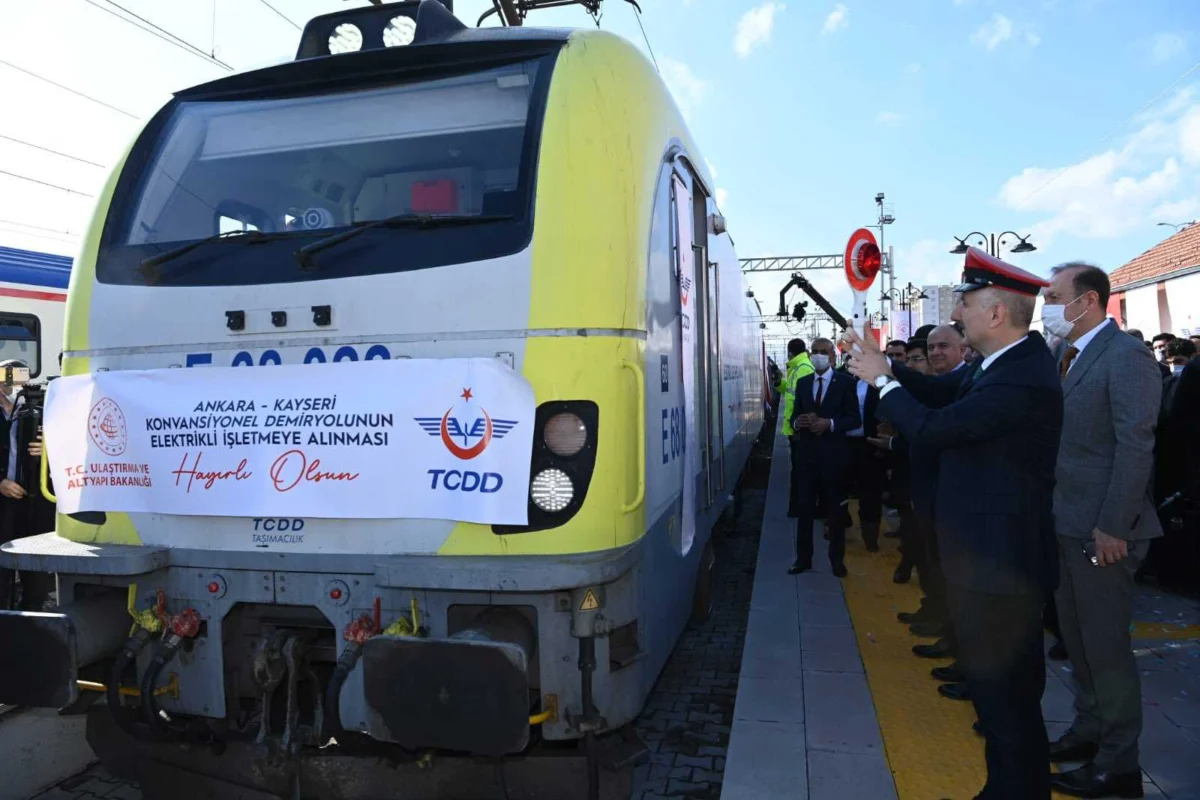
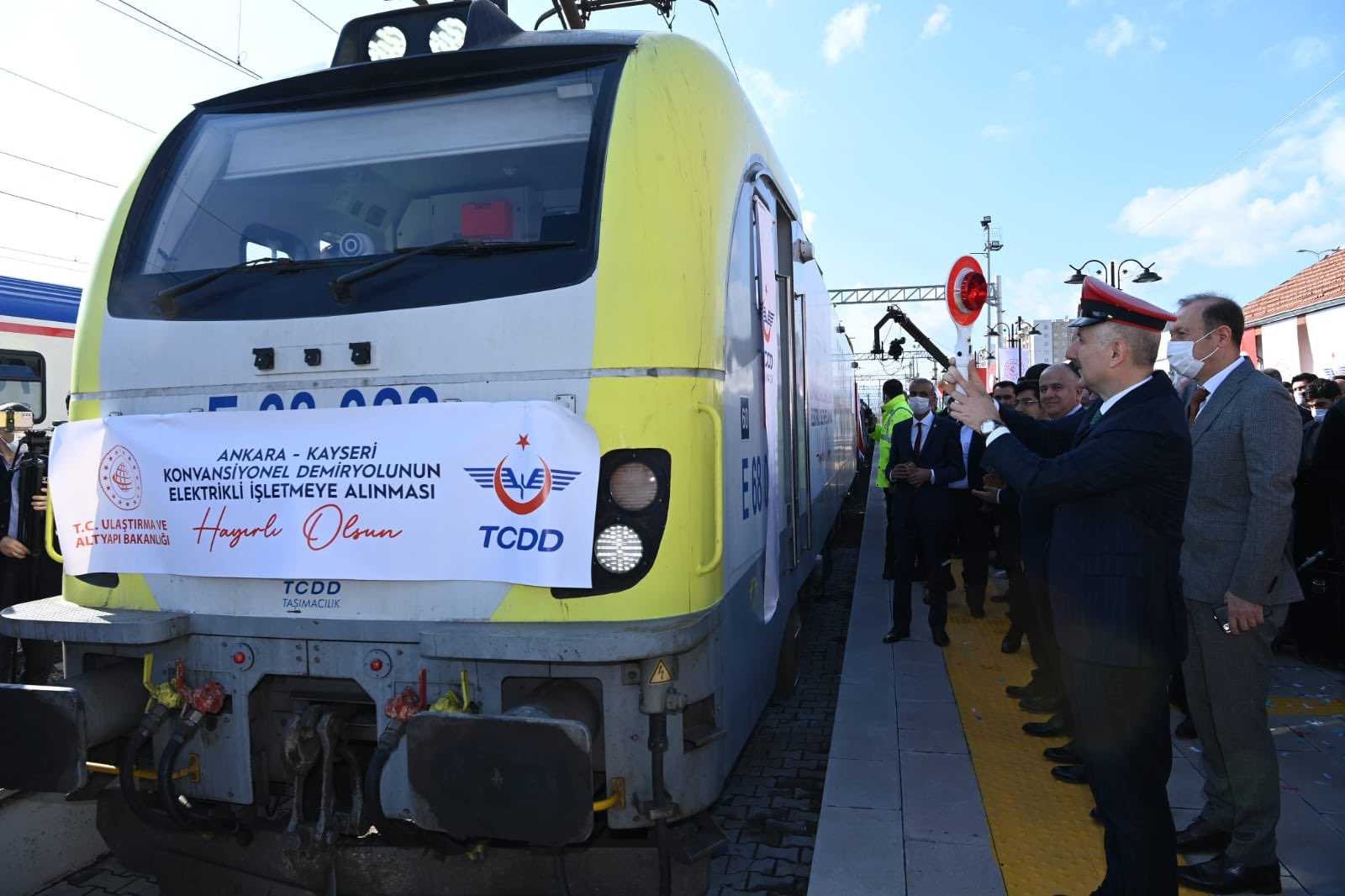
ANKARA — In a significant leap forward for Turkey’s national transportation and green development strategies, the Ministry of Infrastructure has officially inaugurated the completed electrification of the Nenek–Şefaatli rail section and the Tüpraş rail junction. The milestone marks the full electrification of the vital 352-kilometer Ankara–Kayseri conventional railway line, allowing electric locomotives to operate seamlessly across the entire corridor.
The integration of these final segments unlocks new logistical corridors across the country, linking western economic hubs directly to southern destinations. As Turkey aggressively modernizes its century-old railway infrastructure, the latest project underscores a broader, multi-billion-dollar national commitment to decarbonization, heightened operational efficiency, and sustainable economic growth.
Main Facts
The newly completed electrification project spans a critical conventional artery connecting central and eastern Anatolia. According to transport officials, the modernization efforts on the Nenek–Şefaatli section required extensive infrastructural investments, including:
- The installation of 372 kilometers of catenary lines.
- The construction of 118 kilometers of energy transmission lines.
- The establishment of six dedicated transformer centers to ensure a reliable and continuous power supply.
With these components in place, the entire 352 km Ankara–Kayseri railway is now fully electrified. This transition eliminates the operational friction of switching between diesel and electric locomotives, streamlining cross-country freight and passenger operations.
The financial and environmental dividends are immediate. The Nenek–Şefaatli electrification alone is projected to yield annual savings of TRY 20 million (approximately EUR 1.44 million). This includes TRY 9 million (EUR 647,515) in direct fuel oil savings and TRY 11 million (EUR 791,407) in environmental and emission-related cost reductions, preventing the release of 35,000 tonnes of carbon dioxide annually.
Furthermore, this project expands Turkey’s total operational electrified rail network to 5,931 kilometers—representing roughly 45% of the country’s 12,803-kilometer total railway network. Active construction and planning are already underway to electrify an additional 847 kilometers of rail across various other regional sections.
Chronology of Modernization: From Historical Routes to Modern High-Speed Networks
Turkey’s railway sector has undergone a profound transformation over the last two decades, bridging a legacy born nearly a century ago with cutting-edge 21st-century engineering.
- Pre-2003 Era: For decades, Turkey’s rail network suffered from underinvestment. The Ankara–Kayseri line itself was initially opened nearly 100 years ago, operating for generations primarily on aging conventional infrastructure with limited signaling and outdated traction systems.
- 2003–Present (The Reform Era): Recognizing rail as the backbone of sustainable national logistics, the Turkish government initiated a massive overhaul. Since 2003, the state has built 2,149 kilometers of new conventional lines and 1,213 kilometers of high-speed rail connections. TCDD (Turkish State Railways) has systematically overhauled and renewed nearly all lines that were built over 50 years ago.
- February 2021: TCDD initiated dynamic trials on the high-profile Ankara–Sivas high-speed line, performing initial test runs on the Balışeyh–Yerköy–Sivas section.
- Present Day: The inauguration of the Nenek–Şefaatli electrification caps off a series of rapid infrastructure rollouts. Concurrently, major projects—such as the Ankara–İzmir, Bursa–Yenişehir–Osmaneli, and Konya–Karaman–Ulukışla corridors—are moving swiftly through various stages of construction and testing.
Supporting Data: Infrastructure and Investment Metrics
The modernization of Turkey’s railway network is backed by staggering financial commitments and extensive operational metrics.
Network Expansion and Technological Upgrades
- Total Rail Network: TCDD currently operates a 12,803-kilometer network.
- Electrification: 5,753 km (45%) of the network is currently electrified. The government aims to push this figure to 50% by 2023.
- Signaling: Lines equipped with modern signaling systems have increased by an impressive 172%, while electrified lines have grown by 180%, drastically enhancing safety and throughput capacity.
- High-Speed Rail Reach: High-speed rail services currently connect 13 provinces and 44 destinations, servicing roughly 4% of the national population. To date, these high-speed services have safely transported over 69 million passengers.
Major Ongoing Projects
- Ankara–Sivas High-Speed Line: Spanning 405 kilometers, this project has reached 95% physical completion. Once fully operational, it will slash travel times between Ankara and Sivas from a grueling 12 hours down to just 2 hours.
- Ankara–İzmir High-Speed Rail: Infrastructure works have reached 47% progress along this 503.2-kilometer route. Upon completion, travel times will plummet by more than 10 hours—dropping from 14 hours to a mere 3.5 hours—and is projected to serve 13.5 million passengers and handle 90 million tonnes of freight annually.
- Bursa–Yenişehir–Osmaneli Line: Infrastructure development on this 201-kilometer high-speed corridor has achieved 82% physical progress.
- Konya–Karaman–Ulukışla Connection: Following successful dynamic tests on the 102 km Konya–Karaman section, the route is primed for intensive commercial operations, supporting an average of 34 daily passenger and freight trains per direction.
- Aksaray–Ulukışla–Mersin Yenice Project: In an international partnership, the Ministry of Infrastructure recently signed a USD 1.8 billion contract with China Machinery Engineering Corp (CMEC) for this 196-kilometer, double-track electrified line designed for speeds up to 250 km/h. While CMEC handles communication, electricity, and signaling systems, local Turkish firms are spearheading the physical infrastructure.
Financial Scope and Future Vision (2071 Strategy)
Turkey has committed a staggering TRY 1.36 trillion (USD 81.78 billion) toward the total overhaul of its rail infrastructure, having already disbursed TRY 222 billion (USD 16 billion). Investment shares in the sector jumped by 48% recently, with further increases projected.
Looking far beyond the near term, the Ministry has mapped out its comprehensive 2071 Rail Vision. Key pillars of this long-term strategy include:
- Constructing 600 kilometers of new rail junctions to directly connect logistics centers, major factories, industrial zones, and maritime ports.
- Scaling up signaling systems coverage from the current 65% to 90% nationwide.
- Enforcing a strict local content policy, requiring that 80% of all railway systems, components, and rolling stock be manufactured domestically within Turkey.
- Elevating the railway’s share in national logistics and freight transport to 45%.
Official Responses and Perspectives
Government and rail industry leaders have emphasized that the latest milestones are not merely engineering achievements, but critical steps toward a greener, more economically resilient future.
Infrastructure Minister Adil Karaismailoğlu highlighted the strategic fluidity that the Ankara–Kayseri electrification provides to the national grid. "The electrification allows trains coming from the west to be able to reach the south over the Boğazköprü junction," Karaismailoğlu stated during the inauguration ceremony. Emphasizing the historical weight of the reforms, he added: "The most important reform process of the Turkish rail network represents the construction of new lines… Whatever we do for our country, it is our duty to leave a more livable, greener, carbon-neutral Turkey for our nation."
Echoing the Minister’s sentiments, TCDD General Director Metin Akbaş underscored the continental reach of the newly linked tracks. "The electrification of the Nenek–Şefaatli line means trains from the west will pass to the south via Kayseri, and trains departing from İzmir and Edirne will be able to go from Adana to Malatya entirely on electrified tracks. The project directly contributes to our national green development goals," Akbaş noted.
Implications: Economic Growth, Logistics, and Climate Action
The completion of the Ankara–Kayseri electrification and the broader modernization campaign carry profound implications for Turkey’s geopolitical standing, economic competitiveness, and environmental responsibilities.
Economic and Logistical Integration
By focusing investment along both east-west axes and north-south corridors, Turkey is systematically breaking down regional transit bottlenecks. The integration of industrial junctions and port connections ensures that raw materials and manufactured goods can move seamlessly from Anatolian factories to global maritime outlets. This multimodal efficiency is expected to drastically lower supply chain costs for Turkish exporters, bolstering the country’s position as a premier Eurasian trade hub.
Environmental Sustainability and Climate Action
As global pressure mounts to curb transport-related emissions, Turkey’s aggressive push toward railway electrification offers a powerful model for sustainable infrastructure development. The Turkish government is currently formulating a dedicated Railway Energy and Climate Change Action Plan.
By shifting freight and passenger volumes away from carbon-intensive road transport and onto an increasingly electrified, renewable-ready rail grid, Turkey is laying the groundwork for long-term climate resilience. With plans to achieve a 50% electrification rate across its network by 2023—and ambitions stretching toward a carbon-neutral transport sector by 2071—Turkey’s rail renaissance is proving to be both an economic catalyst and an environmental imperative.

